Chapter 2 of Humanoid Robots Series
1X Technologies – Scandinavia’s Humanoid, Silicon Valley’s Swagger
In the rarefied air of global robotics, the most disruptive humanoid unicorn is neither from Silicon Valley nor the workshop sprawls of Shenzhen, but a Norwegian upstart with roots in AI and vision systems: 1X Technologies. In 2025, as the humanoid landscape finally crosses the commercial Rubicon: while US titans like Figure AI and Apptronik are riding high and Asian contenders are multiplying, 1X stands out not simply for its Scandinavian address, but for the sheer audacity of its ambition, distinctive design philosophy, and ruthless operational realism.
The Norwegian Contrarian
The typical European industrial unicorn hews closely to tradition: tight ties with manufacturing heritage, a risk-averse regulatory orientation, and a focus on robotic reliability over flash. 1X, by contrast, launched with the full backing of OpenAI’s venture arm: the sort of connection more common among West Coast AI insurgents than Oslo hardware labs. It has cannily wed this foundation to a pragmatic, product-centered vision. CEO Bernt Børnich, a former computer vision researcher, has articulated the company’s thesis with the clarity of a market-maker: humanoids won’t scale in the real world unless they’re as safe and soft as a household pet and at least as useful as a part-time cleaner.
The result is NEO: a human-sized, tendon-driven robot with a physical “yield” designed to minimize risk and energy use. While the typical industrial arm bristles with high-ratio actuators (storing energy like a compressed spring) NEO trades punch for poise. The goal? A robot that can blunder into a kitchen chair or toddler without starting a lawsuit. In the understated words of its makers, “soft and compliant, capable of incidental contact without causing harm” — a far cry from the macho industrial robots of yesteryear.
Real-World Trials, Real-World Problems
With ongoing pilots in Europe and North America, 1X’s NEO is targeting general-purpose household and light commercial tasks: vacuuming, tidying, laundry, fetching, even answering the door for deliveries. The promise is not science fiction; it is competitive labor arbitrage in an age of chronic demographic collapse and rising wages.
Unlike the bombastic US scene (consider for instance Figure’s multi-billion-dollar narrative tied to Helix AI) 1X has bet on incremental, user-driven learning over grandiose moonshots. Each NEO ships with teleoperation as a fallback: when AI models falter, a human operator seamlessly assumes control via the cloud, a crucial advantage as the edge cases of home robotics are, frankly, endless. The learning system behind NEO is hybrid: reinforcement learning in simulation, expert demonstrations for new chores, and robust teleoperation for the real-world nasties. This tight loop between machine, remote operator, and data science yields a robot that improves iteratively and is a deliberate counter to the “pre-trained and perfect” fallacy of US rivals.
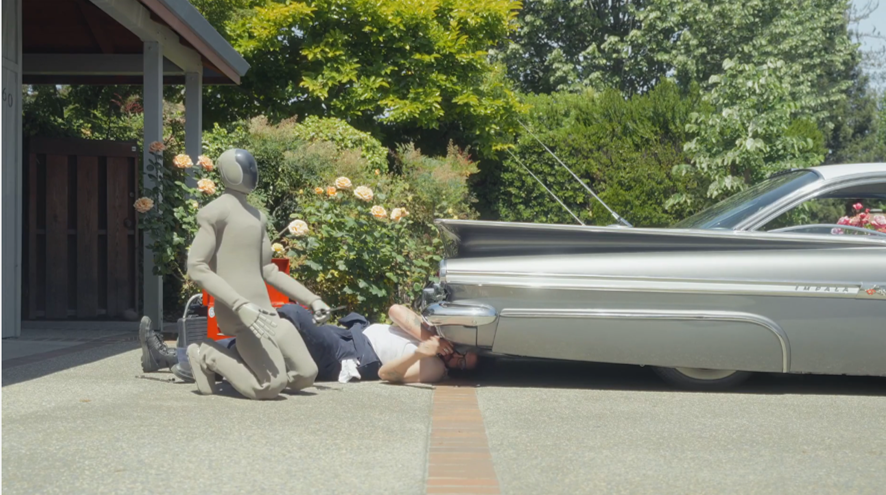
Scandinavian Hardware, Californian Speed
But 1X is not just a philosophical outlier; it is a commercial juggernaut in waiting. NEO, according to the latest roadmap, will be available to consumers at roughly $20,000, thereby potentially undercutting not just Tesla’s hypothetical Optimus, but much of the current industrial robot field. Early access programs are already running in hundreds of homes. Manufacturing ties across Europe have enabled 1X to build at moderate scale without high burn, while US alliances (with venture backing from OpenAI, Samsung Next, and Tiger Global) have accelerated both its AI and go-to-market strategies.
The robot itself weighs about 30 kg (66 lbs), uses tendon-driven mechanisms mimicking muscular-skeletal dynamics, and can handle around 150 lbs deadlift, i.e. the physics of a regular janitor, not a Marvel superhero. Critically, the decision to eschew high-gear motors limits kinetic danger and energy consumption, both prized by potential mass-market buyers and insurance adjusters alike.
Trust, Compliance, and the Value of Failure
Regulators in Europe have proven challenging gatekeepers. Yet, here too, 1X flips the script. By banking on systems that default to safety in both hardware and code the company positions itself as a standard-bearer for “collaborative compliance.” This isn’t merely box-checking for EU Machinery Regulations; it’s smart product design, lowering friction for B2B deployments in everything from eldercare to last-mile logistics.
In a punchy aside, one European VC summed up 1X’s appeal: “The first mass-market humanoid will disappoint its backers: it’ll do less, move slower, and probably break down more than advocates dream. But it won’t kill your dog or burn down your house. That’s the edge.”
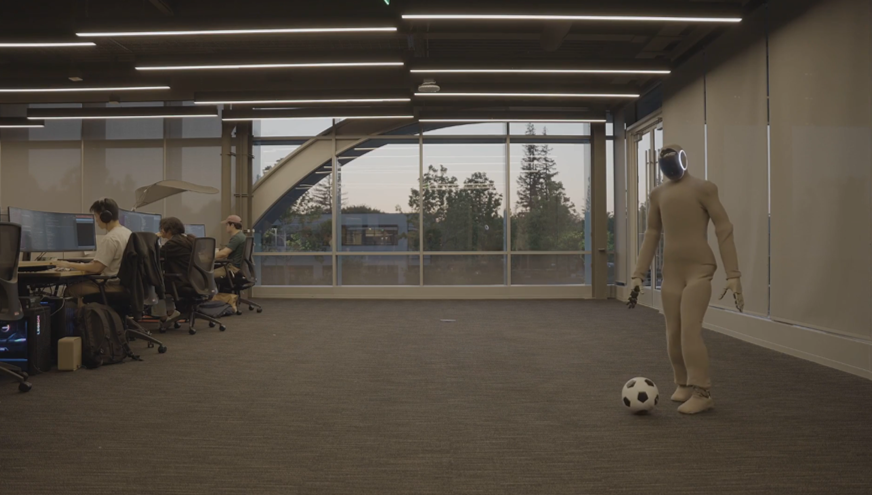
No Magic, Just Data
What makes 1X’s AI credible is not some LLM-powered anthropomorphism, but a relentless focus on embodied supervision. Whereas Figure AI sought its own large vision-language-action model by splitting from OpenAI, 1X has doubled down on manual, task-based data collection at scale, using pilots as an endless resource for UI innovation. Their engineering approach links simulation, remote teaching, and real rollout, with strict controls over safety and reflects a Norwegian attitude to risk and reliability.
The Downside: Nordic Realism
Of course, there are systemic risks. Manufacturing scale lags behind Chinese upstarts. Consumer prices, while dropping, remain well above the threshold for middle-class ubiquity. Energy efficiency is good, but not yet transformative. Most critically, each NEO requires heavy human input for now; the march toward true autonomy remains, in the company’s own estimation, a marathon, not a sprint.
Nevertheless, 1X’s contradictory DNA — a blend of Oslo sobriety, Silicon Valley bravado, and deploy-now pragmatism — might just make it the most interesting humanoid bet outside the US or China. If robots are to live in our homes, not just on conference stages, someone has to build the first one you trust, not just marvel at. On this front, 1X could be the Model T of humanoids: unflashy, incremental, and everywhere.
Unicorn Funds Interest Indication Form
We’re offering exclusive investment opportunities in top global unicorns. Share the companies you’re tracking or wish to gain exposure to by completing this form. We’d love your input.