

Chapter 1 of Rollups: When Private Players Rebuild Public Companies
Why one of FinTech’s largest proposed acquisitions may have far less to do with payments than the market believes
Earlier this month, reports emerged that Stripe and private equity firm Advent International had offered approximately $53 billion to acquire PayPal. If completed, the transaction would rank among the largest acquisitions in the history of FinTech. If Stripe is willing to pursue a transaction of this scale, what business does it believe it is building?
The reported PayPal bid matters less as a single transaction than as a signal. In this article, we will discuss the logic of Stripe’s proposed acquisition and why a “shovel seller” like Stripe is on its way to become a dominate financial infrastructure platform.
From Payment API to Financial Infrastructure
Stripe is often described through the simplicity of its original product. Founded in 2010 by Irish brothers Patrick and John Collison, the company stripped away much of the friction involved in accepting online payments. Developers no longer had to negotiate separately with banks, processors and card networks; a few clean APIs did the work instead. That elegance quickly made Stripe the default payments platform for a new generation of internet companies.
But that story hides how radically Stripe has changed over the past decade. Today, payment acceptance remains Stripe’s on-ramp, not its core identity. Around that original API, the company has built a growing suite of software that embeds financial operations directly into the technology stack. Subscription billing, indirect tax, fraud prevention, treasury, identity verification, embedded finance and rich developer tooling have turned Stripe from a payment gateway into a full financial infrastructure platform.
That dynamic increasingly explains Stripe’s economics. In 2023, the company’s internal valuation plummeted to $50 billion from a peak of $95 billion in 2021. Reports described it as “burning money, slowing growth,” causing even its long-time bullish investors to waver. Its latest tender offer in Feb 2026 valued the company at roughly $159 billion, with annual payment volume approaching $1.9 trillion or about 1.6% of global GDP and clear and stable profitability. Those numbers speak to scale, but they also signal that investors are valuing Stripe more and more like a financial infrastructure platform. The bet that was predicted to be a death spiral turned out to be a win three years later.
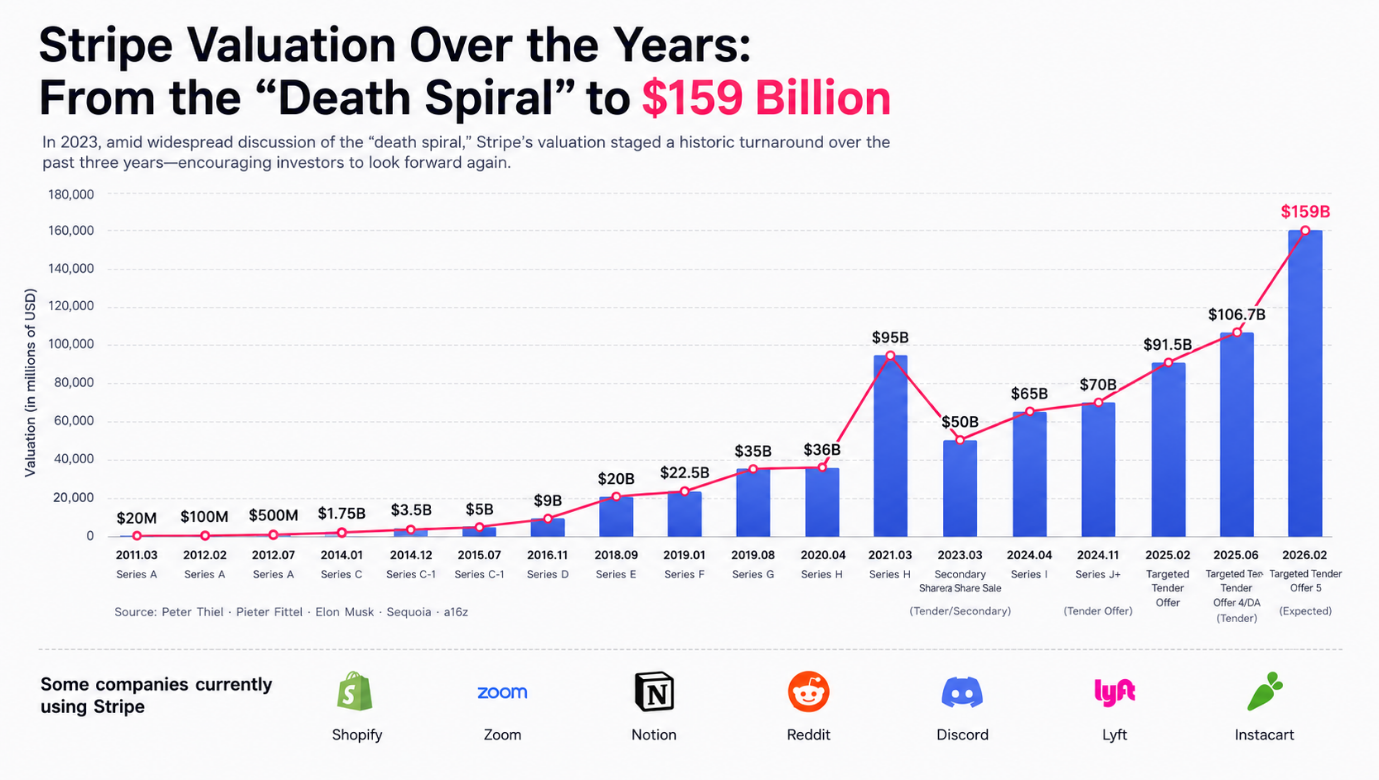
Figure 1. Stripe Valuation History (2021 – 1Q 2026)
Why Infrastructure Is the Crown Jewel
In every gold rush, the most stable business is not gold mining, but selling shovels. There’s only one reason: Infrastructure developers keep their profits for themselves and don’t share them with others. From Amazon to Nvidia, we see some of the highest-valued companies today occupy the infrastructure layer upon which thousands of other businesses depend.
Many star companies that targeted the consumer side of banks are now facing losses, price cuts, or even exiting the market, while those selling shovels are weathering the cycle. Instead of fighting for end users, Stripe provides the software foundation on which merchants, developers and increasingly other financial institutions build. Sellers of financial products inevitably compete with one another. Infrastructure providers, by contrast, can prosper as the entire ecosystem grows – earning returns not just from individual winners, but from the expansion of the market they quietly power.
This architecture also explains why Stripe’s competitive positioning differs from its peers. Companies such as Adyen have built exceptional payment platforms characterised by operational efficiency and disciplined execution. Their focus remains payment optimisation. Stripe’s ambition appears broader. The company increasingly monetises software rather than transactions, creating recurring relationships that extend far beyond payment acceptance itself.
Seen from that perspective, the strategic logic of acquiring PayPal begins to change.
Orchestrating the Next Financial Network
PayPal has more than 430 million active consumer accounts, one of the world’s most recognised payment brands and Venmo’s powerful consumer network. Those relationships are exceptionally difficult to reproduce because they are built through trust and habitual usage rather than software alone. More importantly, those accounts are not merely users; they are verified identities. PayPal operates one of the world’s largest cross-border databases of fully KYC-verified consumers. That trust infrastructure would take decades to recreate organically and could become increasingly valuable as AI agents begin transacting on behalf of individuals and businesses.
The proposed acquisition, if completed, will connect Stripe’s merchant infrastructure with PayPal’s consumer network. It also provides us a useful window into how Stripe appears to view the future of financial infrastructure.
For decades, digital payments have been organised around a relatively stable architecture. Consumers initiate transactions using cards issued by banks. Merchants connect to acquiring banks through payment processors. Visa and Mastercard provide the global networks linking both sides. Most innovation has occurred at the user interface while the underlying settlement infrastructure has remained largely unchanged.
That architecture is beginning to evolve.
Real-time payment systems are proliferating across major economies. Open Banking enables direct account-to-account transfers. Stablecoins are emerging as programmable settlement assets for cross-border commerce. Digital wallets increasingly separate identity from the underlying payment instrument. Instead of one dominant payment rail, merchants are gradually gaining access to multiple parallel networks.
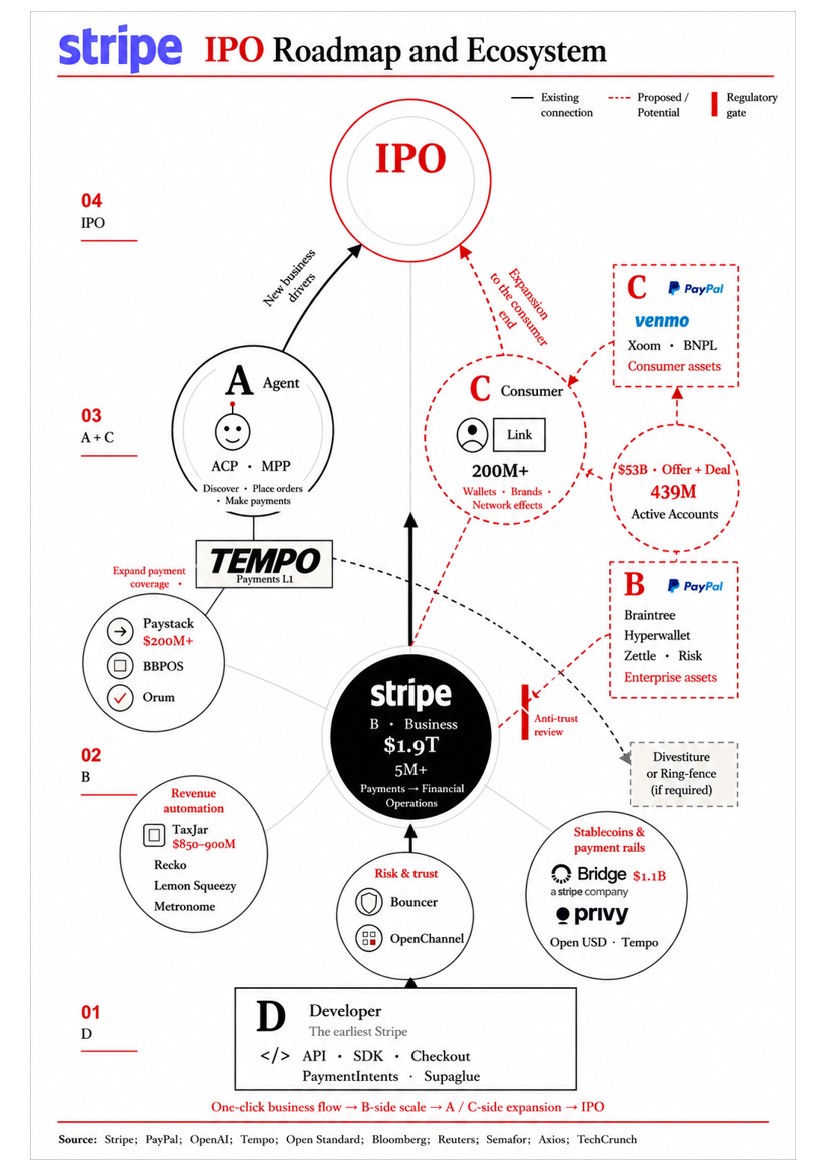
Figure 2. Stripe’s Strategic Architecture & Roadmap to IPO
Stripe’s recent acquisitions suggest that the company intends to operate above those networks rather than inside any single one.
- Using Tempo (a payment chain it co-built with Paradigm) in conjunction with SWIFT, Standard Chartered, and ANZ, it aims to transform the underlying standards of cross-border messaging.
- By acquiring Bridge (stablecoin), Privy (wallet), and Metronome (pay-as-you-go), it has secured a foothold in the new fee pool for “how to charge in the AI era” in advance.
- With Open USD Alliance, Stripe helps shape a shared settlement asset that is built from the start to plug into its payments stack, Tempo blockchain, and machine‑payments protocols. This allows Stripe to move up a layer, from just processing stablecoin payments to helping define the standard and economics of on‑chain dollars themselves as an infrastructure co-architect.
- Through the Agentic Commerce Protocol (ACP) partnership with OpenAI, an open standard that lets AI agents like ChatGPT complete purchases directly with merchants in a safe, controlled way, Stripe extends its global, programmable financial infrastructure, including Checkout, Billing, Tax, Radar, and Link, to the agentic world.
Taken together, they point in a consistent direction. Stripe is preparing for a world in which software dynamically selects the most appropriate payment rail according to geography, regulation, transaction size and customer preferences. Whether value ultimately moves through Visa, Mastercard, FedNow, PIX, UPI or stablecoin networks becomes increasingly secondary. The platform coordinating those choices becomes strategically more important than any individual rail.
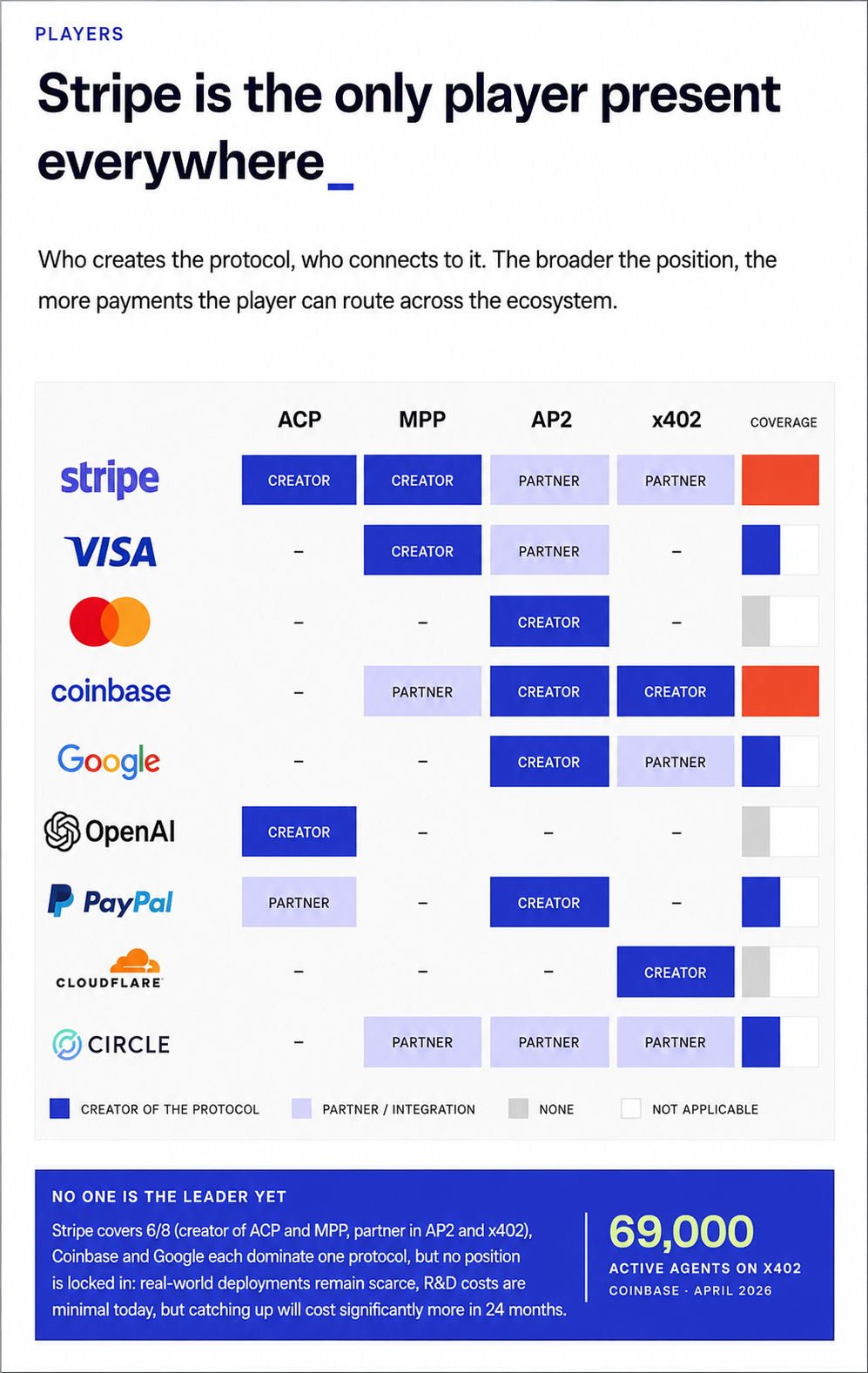
Figure 3. Stripe’s Expansion Across the Next Generation of Financial Infrastructure
This represents an important shift in competitive dynamics. Previous generations of payment companies competed by controlling proprietary networks. Increasingly, competitive advantage may accrue to those capable of orchestrating many networks simultaneously while abstracting their complexity from customers. Merchants care less about the settlement mechanism itself than about receiving a fast, secure and cost-efficient transaction. Software determines how that objective is achieved.
This is where Stripe’s infrastructure strategy becomes particularly compelling. Every additional payment protocol, digital asset or settlement mechanism increases the complexity of financial operations. Complexity creates demand for orchestration. As the number of payment rails expands, the software layer coordinating them becomes progressively more valuable.
Conclusion
The reported acquisition of PayPal has largely been interpreted as another consolidation within digital payments. A closer examination suggests something more ambitious. Over the past fifteen years, Stripe has expanded steadily beyond payment acceptance into the software infrastructure that underpins digital commerce. If history remembers this transaction, it may not be because it was one of FinTech’s largest acquisitions. It may instead mark the moment when the market recognised that Stripe’s ambitions had quietly outgrown the payments industry altogether towards a broader platform connecting developers, merchants, consumers and multiple forms of digital money.